Task Batching With ADHD: Give Small Jobs a Place in Your Day
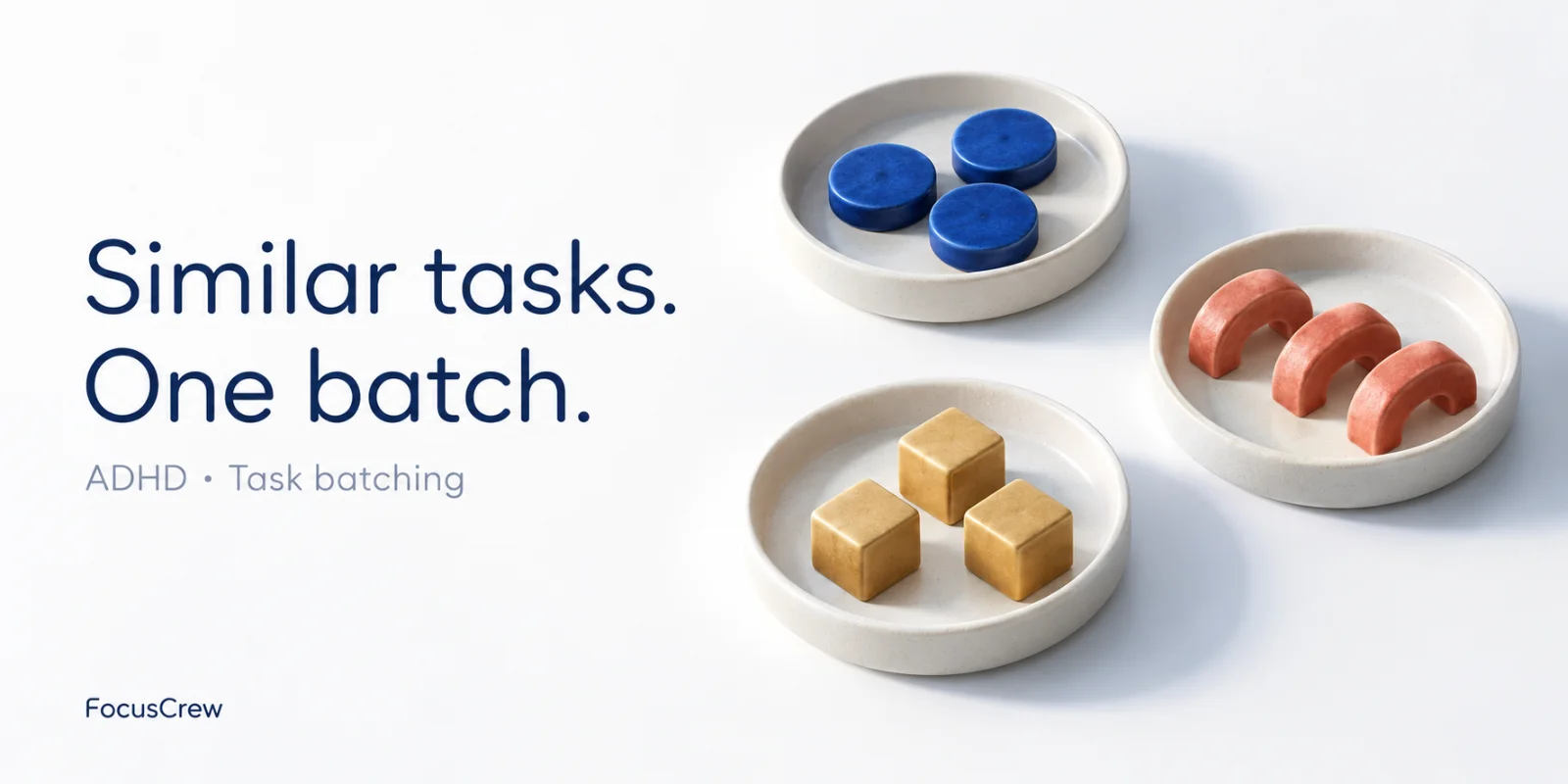
One email becomes a document search, then a calendar change, then another message. By the time you return to your main task, you have done useful things but lost your place. Task batching, featured in FocusCrew’s ADHD Toolbox, means giving related jobs a shared work period rather than scattering them across the day.
What Research Says About Interruptions
In a field experiment, participants reported less stress during a week when they were instructed to check email less frequently.[1] This does not establish an ideal checking schedule for ADHD or prove that batching every kind of task increases productivity. Separate research on interruptions found benefits from briefly planning how to resume unfinished work.[2] That suggests combining fewer avoidable switches with a clear return point.
Start With One Small Batch
Start with one modest batch, such as answering three routine messages or organising the files for one project. Group work that needs a similar context, and choose a boundary you can keep. Before starting, decide which urgent matters genuinely need attention outside the batch. Batching is less suitable when your responsibilities require immediate responses.
Organise Related Tasks in FocusCrew
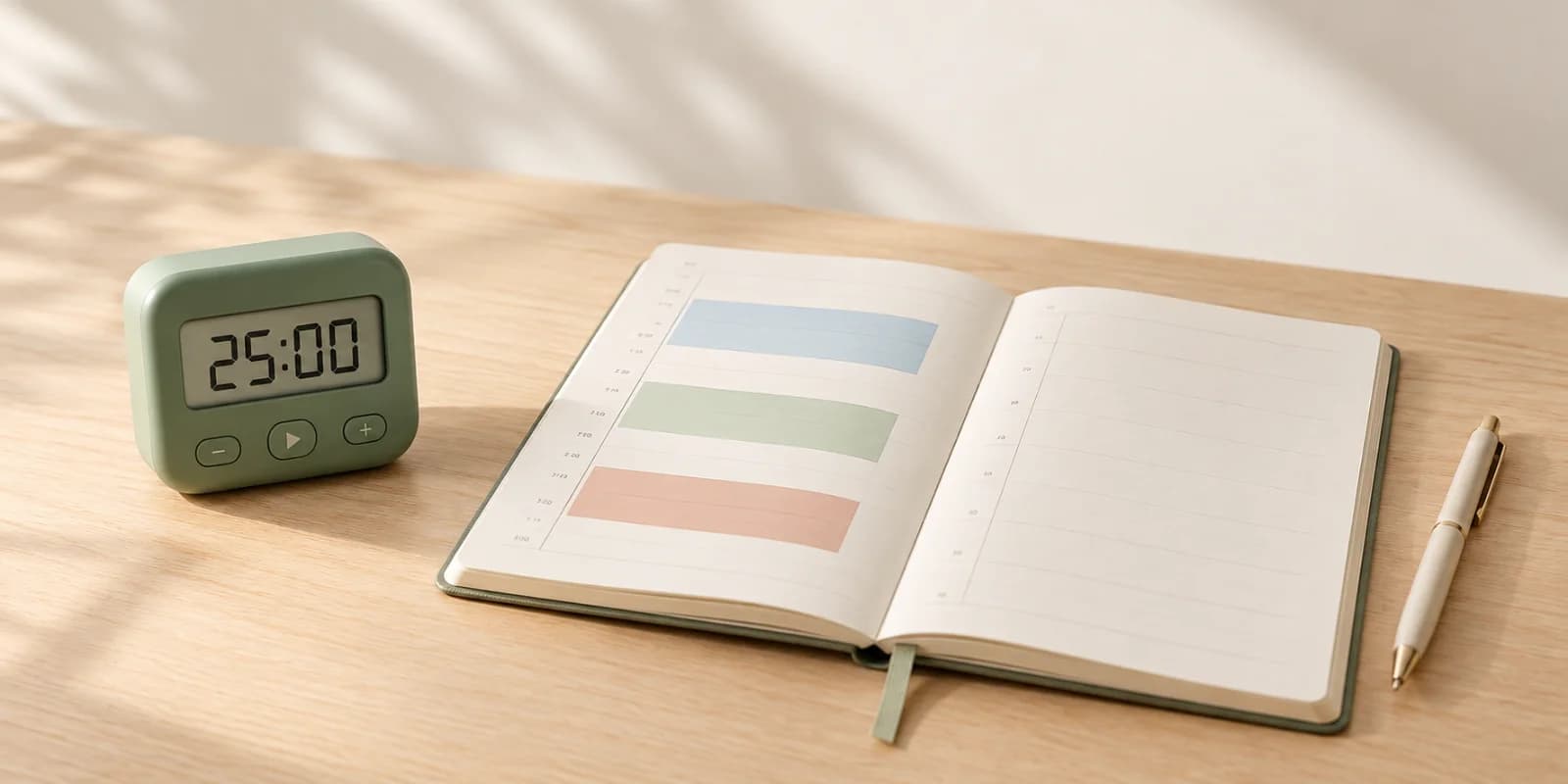
In FocusCrew, use a project or label to organise related to-dos, then select the first task for a focus session. Give the batch a place through time blocking. For example, reserve a short period after lunch for routine replies, then return to the main task you chose when planning today’s priorities.
Set a Clear Stopping Point
Stop at the boundary and review what remains. A large batch of repetitive work can become difficult to sustain, so shorten it or split it across the day if needed. If a message creates a substantial new task, capture that task for later instead of silently expanding the batch. The useful result is a day with clearer decisions about when small jobs receive your attention.
References
- Kushlev, K., & Dunn, E. W. (2015). Checking email less frequently reduces stress. Computers in Human Behavior, 43, 220–228.
- Leroy, S., & Glomb, T. M. (2018). Tasks interrupted: How anticipating time pressure on resumption of an interrupted task causes attention residue and low performance on interrupting tasks and how a “ready-to-resume” plan mitigates the effects. Organization Science, 29(3), 380–397.