Studying With the Body Doubling Technique

You have opened your course materials, but starting still feels difficult. Body doubling means working on your own task while someone else works alongside you. For studying, that could mean sitting beside a friend in the library or arranging a quiet online study window. You do not need to study the same subject, teach each other, or keep a conversation going. The aim is to make showing up feel a little less solitary.
Some people find that this shared presence adds gentle accountability, but it is worth keeping expectations realistic. Direct evidence that body doubling improves studying remains limited. Broader research on social facilitation shows that other people’s presence can affect performance differently depending on the task: a meta-analysis found benefits for the speed of simple tasks, but poorer performance on complex tasks.[1] That research is not a test of FocusCrew or camera-free body doubling. Treat company as something to experiment with, and choose a quieter setup if it makes difficult material harder to understand.
To try a session, pick one clear outcome: “answer five practice questions” is easier to act on than “study chemistry.” Agree with a friend on a period of quiet work, silence unnecessary notifications, and save conversation for afterwards. A Pomodoro study session can provide a starting structure—perhaps 25 minutes of work followed by a short break—but adjust the length to your task and energy. Before you begin, open the exact material you need so the first action is ready.
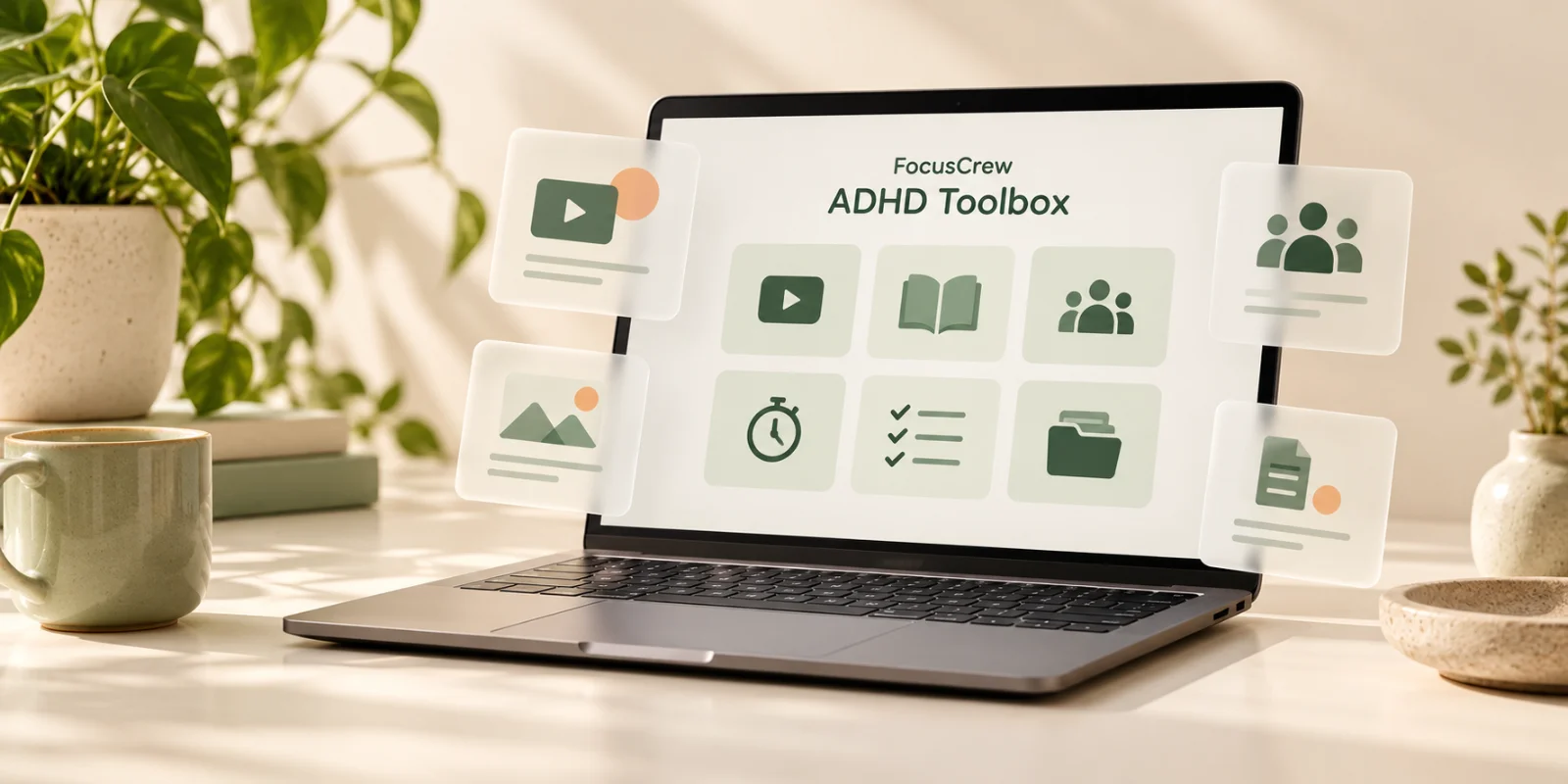
FocusCrew brings this routine into a digital space with task planning, focus timers, and small crews. Add your study task, select it for a focus session, and start your timer. Its camera-free approach means you can seek quiet accountability without a video call. Arrange an overlapping study window with friends if you want to focus at the same time; crew goals also collect completed sessions whenever they happen, so shared progress does not depend on identical schedules.
Use the company to support a useful learning activity. After reading a section, close it and try to explain the main ideas from memory, then reopen it to check what you missed. Research by Karpicke and Blunt found that retrieval practice improved learning from science texts compared with elaborative studying through concept mapping.[2] That finding supports the study method, not body doubling itself. At the end of your session, notice both what you learned and whether company helped you start or stay engaged. Keep the parts that work, and make the next session manageable.
References
- Bond, C. F., Jr., & Titus, L. J. (1983). Social facilitation: A meta-analysis of 241 studies. Psychological Bulletin, 94(2), 265–292. https://doi.org/10.1037/0033-2909.94.2.265
- Karpicke, J. D., & Blunt, J. R. (2011). Retrieval practice produces more learning than elaborative studying with concept mapping. Science, 331(6018), 772–775. https://doi.org/10.1126/science.1199327