The Two-Minute Start: A Gentler Way to Begin With ADHD
Sheida ·

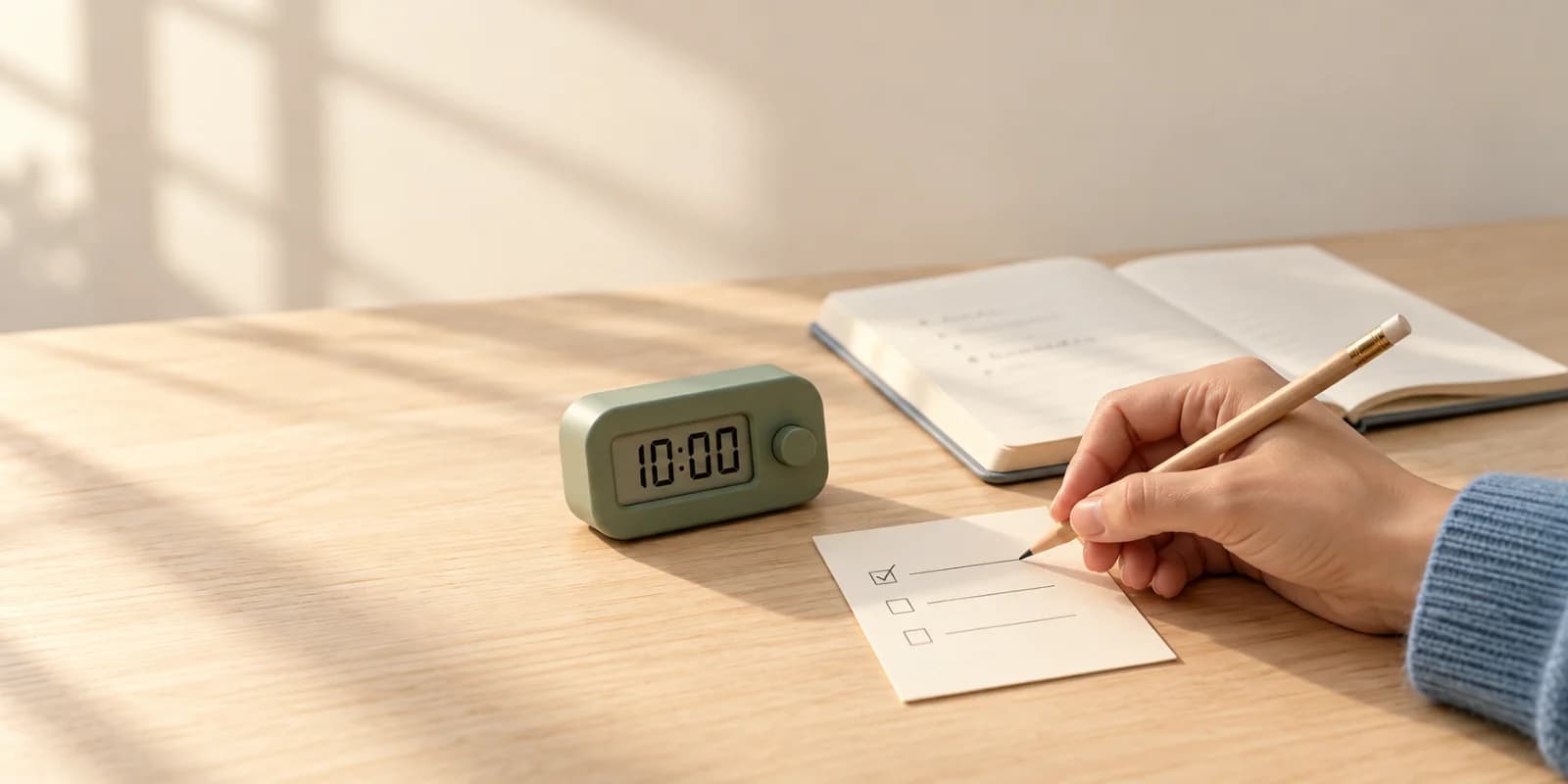
A task can matter to you and still feel difficult to begin. The two-minute start, featured in FocusCrew’s ADHD Toolbox, asks you to commit to a very short beginning. You might open an application form and fill in your name, or write the first sentence of an email. You are choosing a small action with a clear stopping point.
There is no established scientific rule that two minutes is the ideal duration for ADHD. Related research offers a useful principle: a meta-analysis found that specific “if–then” plans helped people translate intentions into action.[1] A trial of structured therapy for adults with ADHD also supported teaching planning and organisation skills.[2] Neither study tested this exact technique, but both provide context for making a starting plan more concrete.
Try this wording: “After I sit down with my morning drink, I will open the document and write one sentence.” Set a two-minute countdown and do that action. If you spend the whole time deciding what to write, shrink the next attempt to adding a heading. This is one practical way to approach working when you do not feel like starting.
In FocusCrew, give the first action its own to-do so it is easy to find again. Follow the Toolbox’s countdown exercise, then choose a short focus session if you want to continue. You can add camera-free accountability when a little company makes the attempt feel easier.
When the two minutes end, make a genuine choice to stop or continue. Do not turn permission to stop into a trick that commits you to an hour. Leave a brief note about your next action if the task is unfinished. The useful outcome is a clearer, more approachable beginning—even when that is all you have capacity for today.
References
- Gollwitzer, P. M., & Sheeran, P. (2006). Implementation intentions and goal achievement: A meta-analysis of effects and processes. Advances in Experimental Social Psychology, 38, 69–119.
- Solanto, M. V., et al. (2010). Efficacy of meta-cognitive therapy for adult ADHD. American Journal of Psychiatry, 167(8), 958–968. https://doi.org/10.1176/appi.ajp.2009.09081123