ADHDBody DoublingHabitsPlanningProductivity
7 Productivity Tools Compared: Which One Fits the Way You Work?
Sheida ·

A productivity tool is useful when it addresses the part of work where you get stuck. You might need to capture forgotten tasks, coordinate a team, or protect time to concentrate. This comparison looks at seven options—FocusCrew, Todoist, Notion, Trello, Asana, Forest, and Freedom—by their main strengths, rather than treating them as an objective ranking. Start by identifying your biggest obstacle, then choose the tool that helps you act on it.
For organising work, compare the kind of structure you need. Todoist centres on tasks, projects, and reminders; Notion connects project databases with notes and documents. Trello makes work visible through boards and cards, while Asana offers project views and dependencies for coordinating connected tasks. My suggested fit for each tool appears below. Feature availability can vary by subscription and platform, so this is a comparison of core uses rather than an assertion that every feature is free.
| Tool | Core strength | Consider it when… | |---|---|---| | FocusCrew | Task planning, habits, focus sessions, and camera-free crews | You want a connected routine for planning and doing, with quiet accountability. | | Todoist | Task capture, projects, due dates, and reminders | Keeping track of everyday commitments is your main challenge. | | Notion | Documents, notes, and customisable project databases | Your tasks need to sit alongside detailed information. | | Trello | Visual boards, cards, checklists, and automation | You want to follow work as it moves through clear stages. | | Asana | Project coordination, timelines, and dependencies | Several people’s tasks need to happen in a coordinated order. | | Forest | A focus timer that grows virtual trees | A visual reward makes putting your phone aside more appealing. | | Freedom | Scheduled blocking of distracting apps and websites | You know what to do, but distractions repeatedly pull you away. |
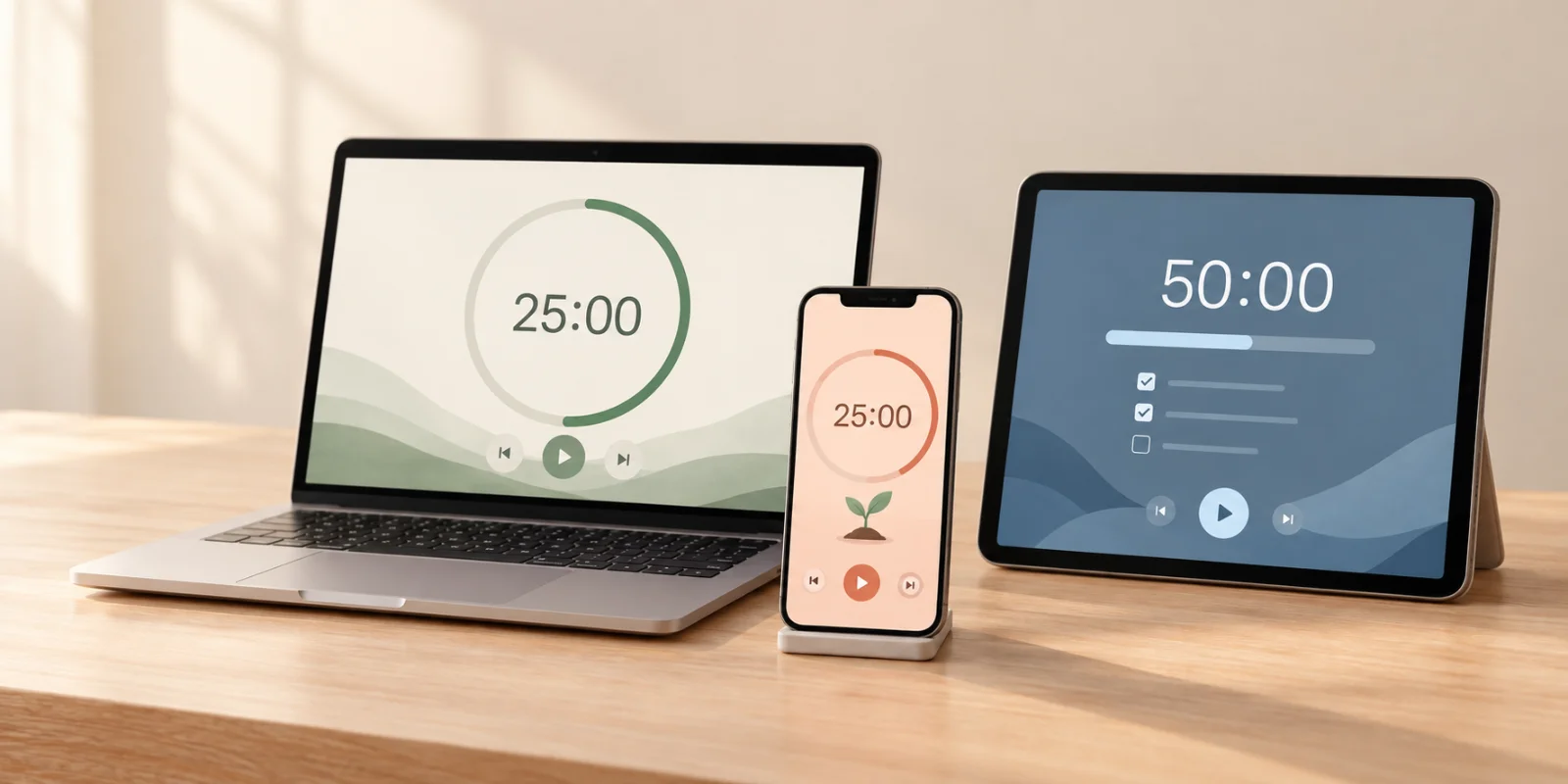
For protecting attention, Forest and Freedom take different approaches. Forest makes focus sessions visible through a growing virtual forest, while Freedom restricts access to selected distractions during blocking sessions. Decide whether you want an incentive to stay with the task or a barrier against leaving it. You can also combine Pomodoro and time blocking: reserve time for important work, then give the session a manageable length.
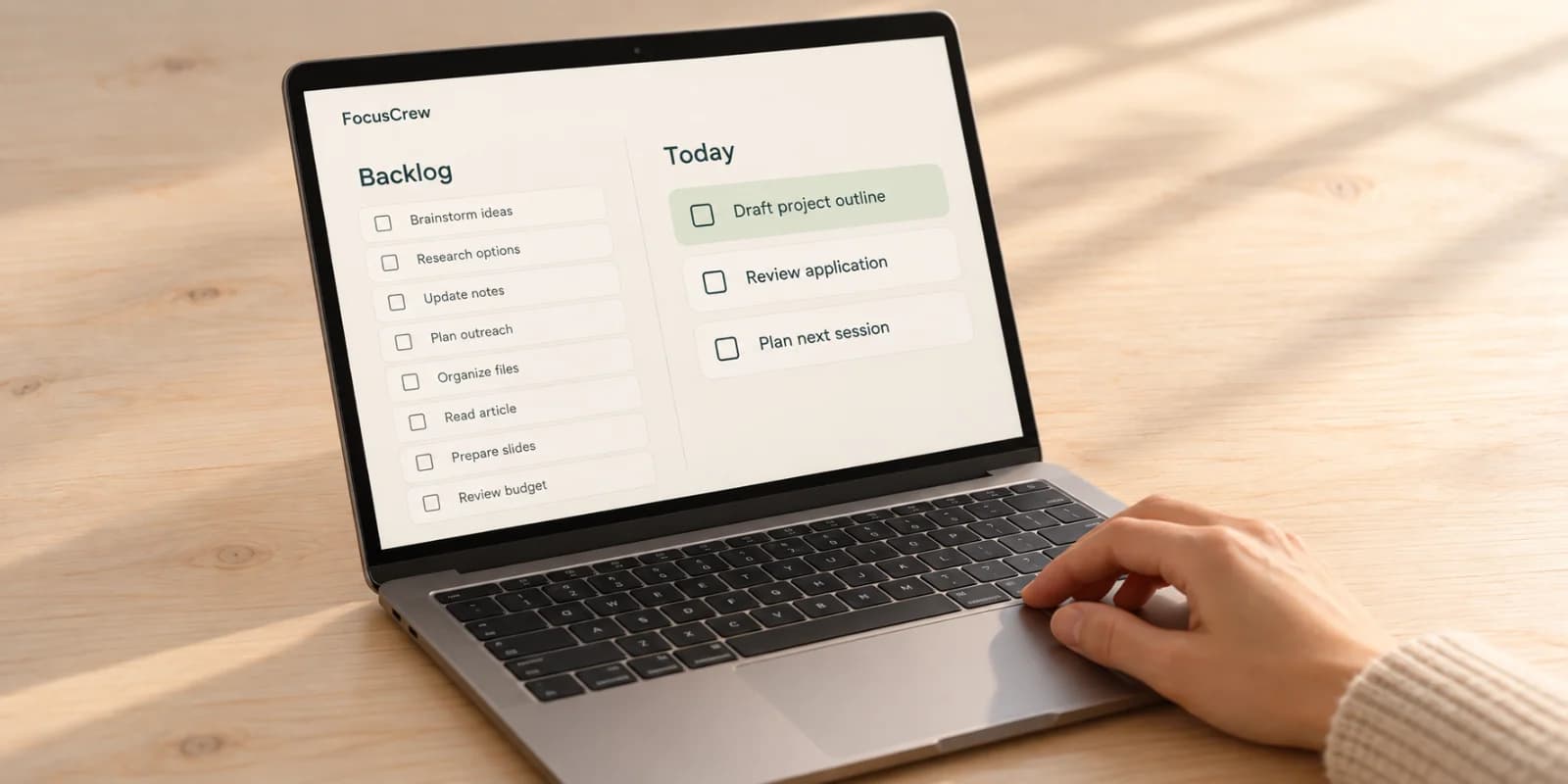
FocusCrew connects planning with the moment you begin. Choose a to-do, start a focus session, track habits, and contribute to a crew’s shared goal. Its camera-free body doubling approach suits people who want company without appearing on video, while gamification makes progress visible through XP, gems, badges, and leaderboards. It is a natural option to explore when the gap between making a plan and starting it is your main difficulty.
Choose a tool around a behaviour you can repeat. Experimental research found that making specific plans reduced interference from unfinished goals,[1] and a meta-analysis found that interventions encouraging progress monitoring improved goal attainment on average.[2] These findings support planning and reviewing progress; they do not show that any of these seven apps is superior. Try one tool on a real project for a week: practise choosing today’s priorities, complete a manageable work session, and review what moved forward. Keep the system that helps you return to meaningful work.
References
Scientific articles
- Masicampo, E. J., & Baumeister, R. F. (2011). Consider it done! Plan making can eliminate the cognitive effects of unfulfilled goals. Journal of Personality and Social Psychology, 101(4), 667–683. https://doi.org/10.1037/a0024192
- Harkin, B., Webb, T. L., Chang, B. P. I., Prestwich, A., Conner, M., Kellar, I., Benn, Y., & Sheeran, P. (2016). Does monitoring goal progress promote goal attainment? A meta-analysis of the experimental evidence. Psychological Bulletin, 142(2), 198–229. https://doi.org/10.1037/bul0000025
Official product sources
Feature descriptions checked on 5 October 2026. Suggested use cases are editorial judgments, not findings from the studies above.