Eisenhower Matrix method
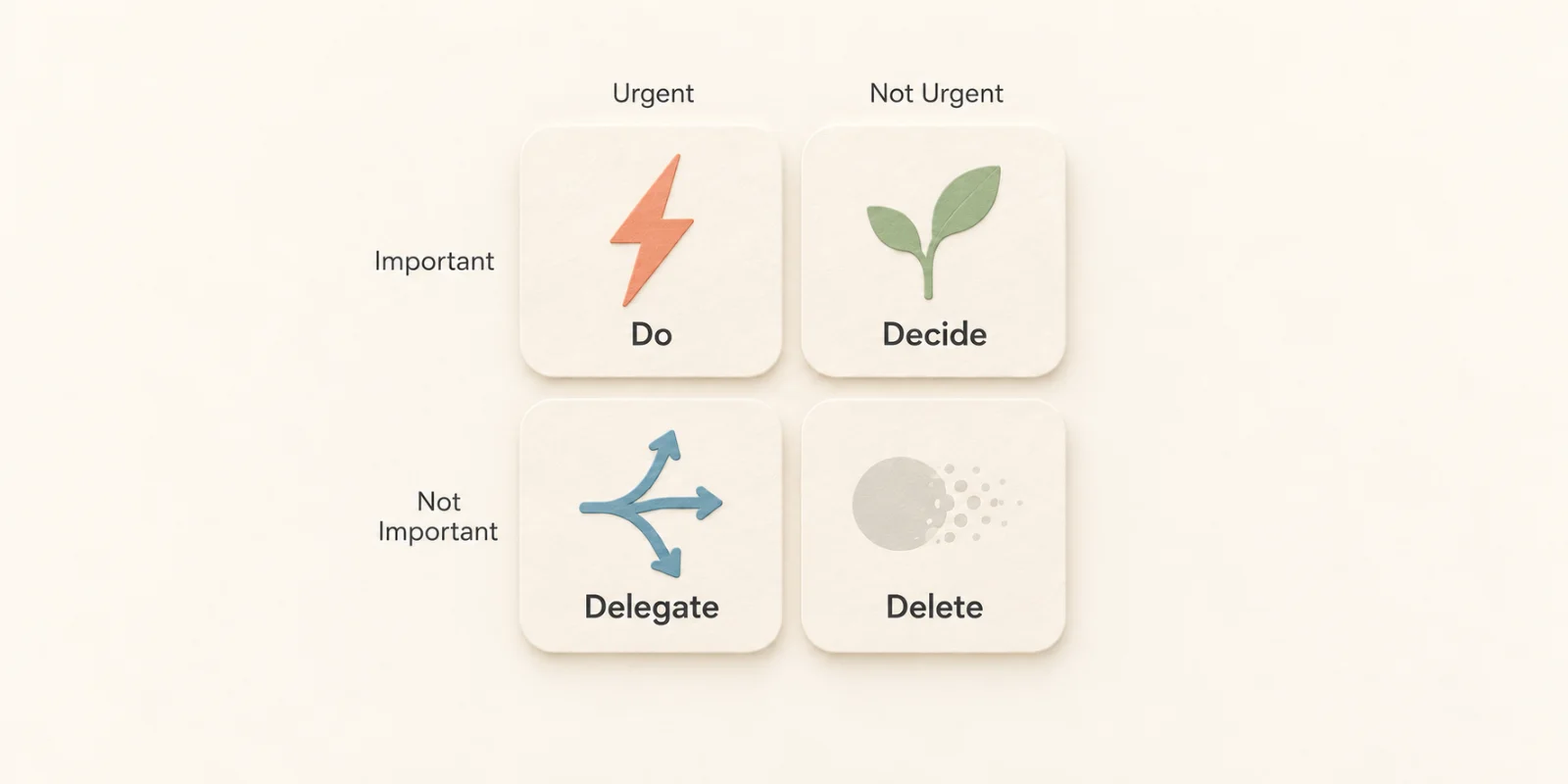
A long to-do list can leave you wondering where to start. The Eisenhower Matrix method offers a simple way to prioritize: look at how urgent a task is and how important it is. Urgency asks whether something needs attention soon; importance asks whether it supports your goals, responsibilities, or values. Separating the two helps you make a more deliberate choice about your next task. [1]
The matrix has four quadrants: Do for urgent and important tasks; Decide for important tasks that are not urgent, where you choose when to work on them; Delegate for urgent tasks that are less important to your own priorities and can appropriately be passed on; and Delete for tasks that are neither urgent nor important. Think of these as prompts for making decisions, with room for your circumstances. [1]
For example, submitting an application due today might belong in Do, while developing a skill for your next career move belongs in Decide. Giving important work a place in your schedule helps it receive attention before it becomes urgent. This reflects the principle behind Stephen Covey’s “Put First Things First”: organize your time around what matters most. [2]
FocusCrew now includes an Eisenhower Matrix, so you can organize your to-dos into Do, Decide, Delegate, and Delete directly in FocusCrew. When your list feels crowded, use the matrix to review what needs attention, what deserves planned time, what could be shared, and what you can let go of.
To get started, pick five tasks and place each one in a quadrant. Then choose one clear next action, such as opening the application form or outlining the first paragraph. Revisit your choices as deadlines and priorities change. Keep the process light, and remember that rest, relationships, and personal needs can be important too—even when they have no deadline.
References
- Todoist. The Eisenhower Matrix: Avoid the Urgency Trap.
- FranklinCovey. Habit 3: Put First Things First.